A film robot can earn money in more ways than appearing on screen. The machine may be rented, operated, repaired, programmed, or built into a wider production service.
For a studio, the business question is practical: which part of that work saves time, cuts risk, or makes a shot possible with fewer people and less equipment?
Quick read
- Rental turns a costly machine into a booked production asset.
- Skilled operators can earn from setup, control, safety, and shot planning.
- Repairs, spare parts, training, and software may bring income after the first sale.
Rental is the clearest starting point
Many productions need a robot for a short run, not permanent ownership. A rental company can buy the machine once, then charge for access across many shoots, with an operator and transport added to the booking.
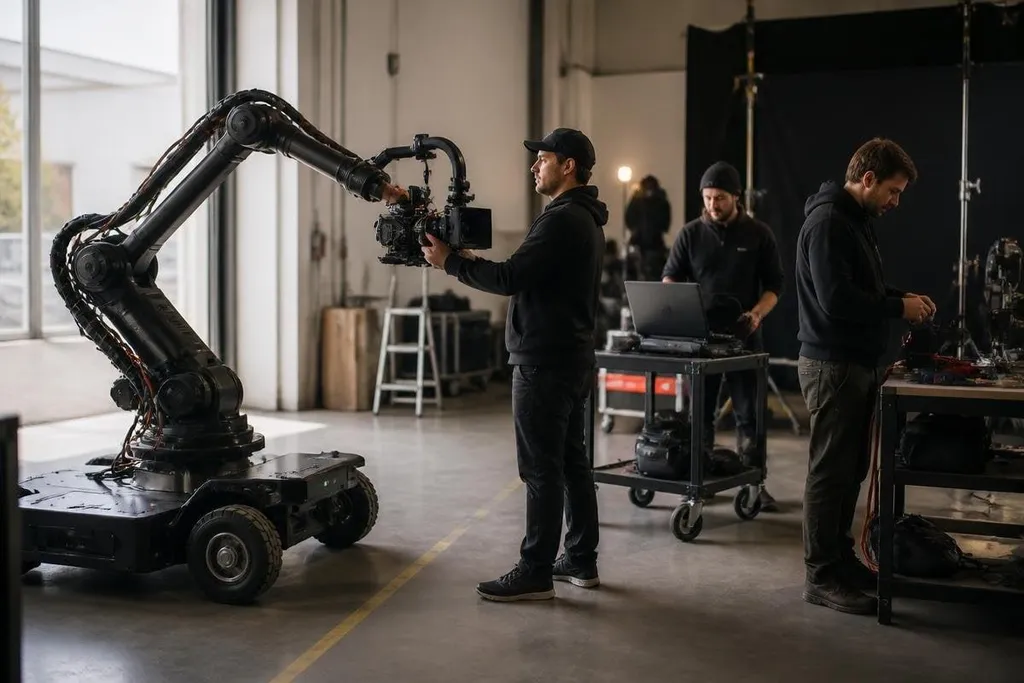
That model works best when the robot has a clear job. A camera arm might repeat a move with tight timing. A tracked platform might carry a camera through a space where a larger vehicle cannot fit. A robotic prop might repeat the same motion across many takes.
The rate cannot be based on the robot alone. It also has to cover batteries, transport cases, setup time, insurance, maintenance, software licenses, and the operator's day rate. A low rental price can lose money if every job needs a long setup.
The business owner also needs a plan for downtime. A failed motor on a shoot can stop a crew, so spare parts and a repair process may matter as much as the machine's top speed.
Operators sell judgment, not buttons
Film robots rarely work as unattended equipment. Someone must place the machine, check its limits, plan the path, set camera timing, and stop the motion when a person enters the working area.
That creates a service business around robot operation. A small production may rent the machine and hire the operator together. A larger studio may buy the hardware but still need outside help for a difficult shot or a new control system.
The useful skill is knowing what the robot can repeat safely. A smooth movement on a test floor may change when the floor, lighting, load, or camera package changes. Shot planning must account for reach, payload, joint limits, cable movement, and the space around the robot.
Those limits also shape the evidence you use when pricing a film robot. Producers can pair them with Robot24.com robotics coverage when checking a machine’s task, price, test record, and staff needs before the software and integration work begins.
Software and integration create repeat work
A robot becomes more useful when it fits the rest of the set. That can mean linking motion control to a camera trigger, storing repeatable paths, adding a remote stop, or building a simple control panel for a crew.
These jobs can bring income without another hardware sale. A rental company might charge for custom motion files. A systems firm might connect the robot to a motion-control package already used by the production team. A software company might sell tools that store shots, manage versions, or check whether a planned move stays inside safe limits.
The buyer needs to ask who owns the files and who can edit them later. A production that cannot reuse its motion data may pay for the same setup on every shoot.
Safety, training, and repair are real services
Film sets change often. Crews move lights, stands, cables, and people around the robot between takes. That makes site checks, operator training, risk documents, and clear stop procedures part of the commercial work.
A company can sell training for camera crews, stage managers, and technicians. It can also inspect machines before a job, keep service records, replace worn parts, and check batteries. These services are easier to plan when the company works with a small set of robot models instead of accepting every system.
The limit is that safety advice cannot replace the maker's instructions, local rules, or production insurance. Anyone selling this work needs a clear boundary between technical support and legal responsibility.
Choose the business before the machine
Before spending money, check these points:
- Name the buyer. Decide whether the customer is a studio, rental house, camera team, or effects company.
- Price the full day. Add transport, setup, operator time, insurance, power, repairs, and storage.
- Test repeat work. Confirm that the robot can save and run the same shot without manual correction.
- Plan for failure. Keep spare cables, batteries, tools, and a way to finish the shot if the robot stops.
- Protect the data. Set rules for motion files, camera data, revisions, and access after the job ends.
I'd start with rental plus operation, then add software or repair work after the same customers ask for it twice. That path ties each new service to a real production need instead of betting on a robot before anyone has booked it.
The next useful number is not the robot's maximum speed. It is the number of paid shoot days needed each month to cover the machine, operator, storage, and repairs.